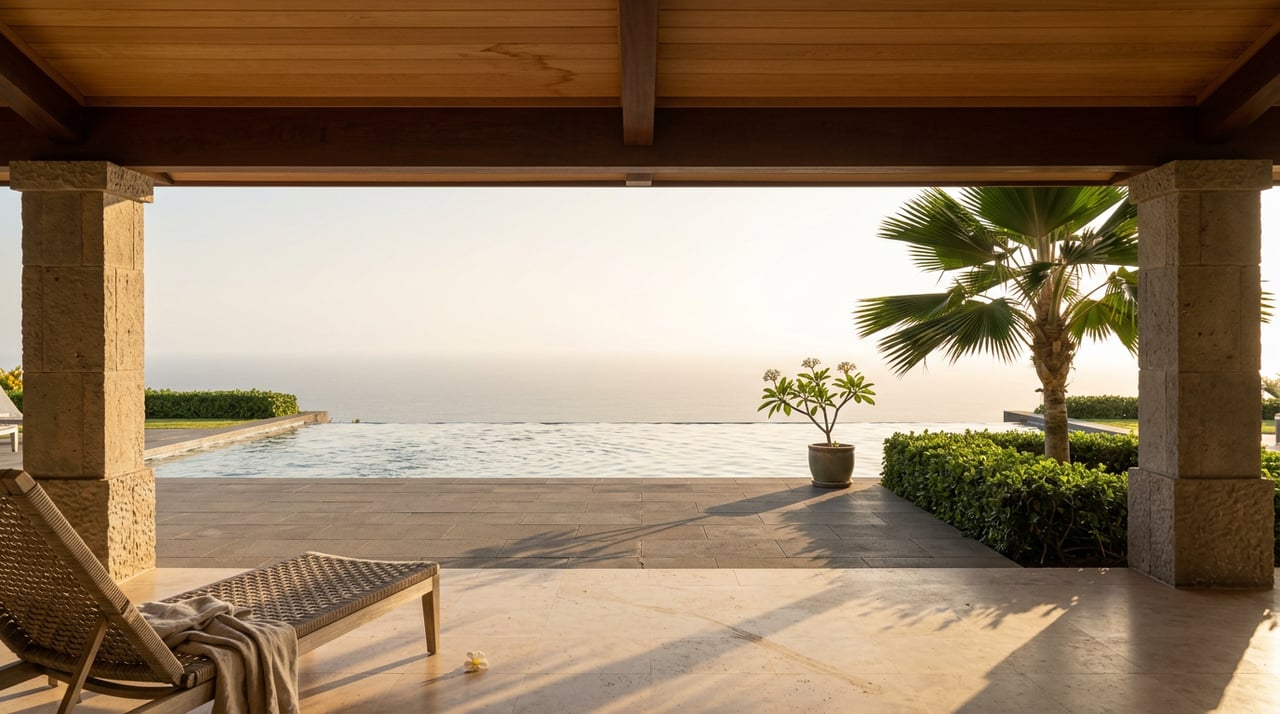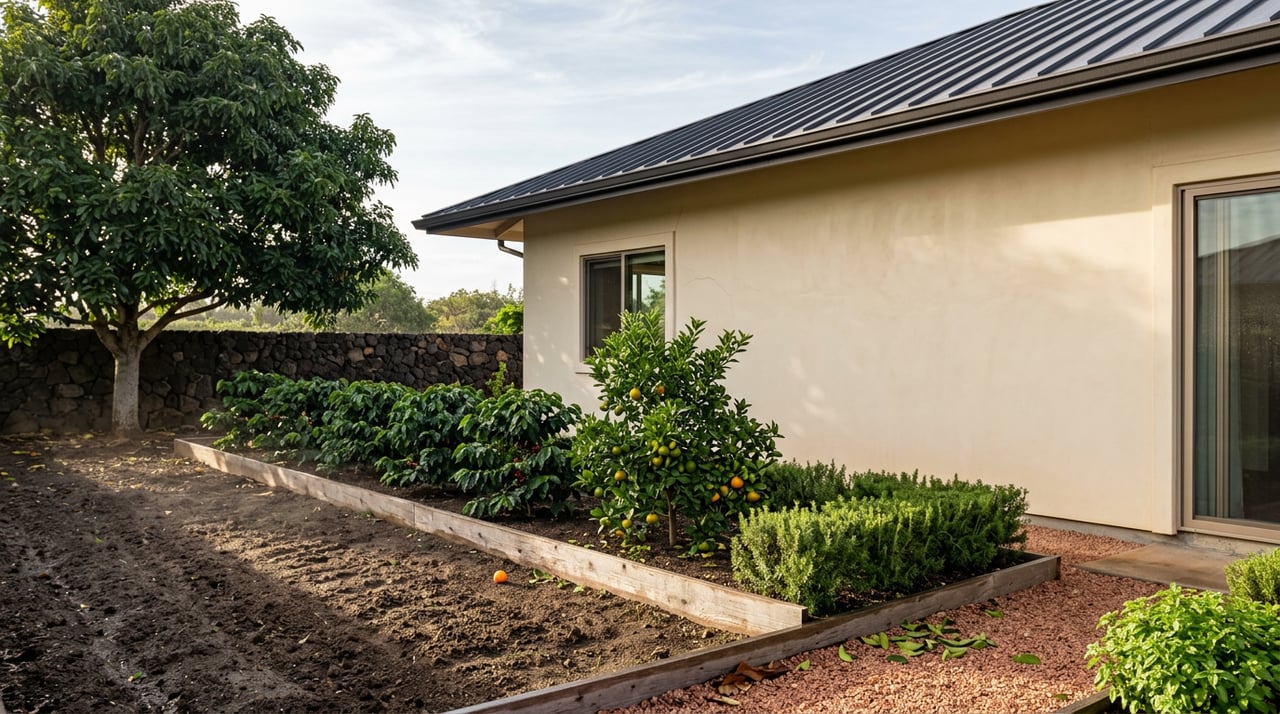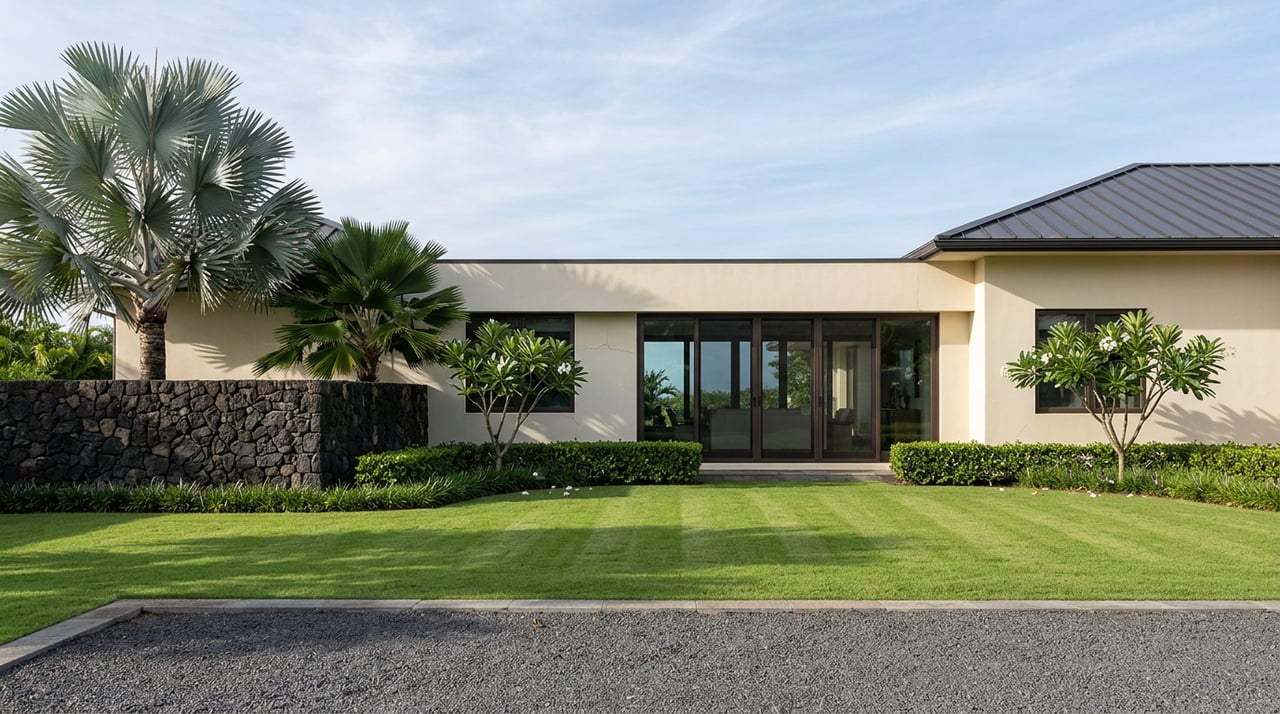
Two homesites in the same Kona Coast development, similar acreage, similar sightline to the water, priced within a few hundred thousand dollars of each other. On paper it reads like the same purchase. In practice, one of them has already cleared months of work the other hasn't touched, and that gap rarely shows up in the photos. It shows up in three or four words buried in the listing description: graded and ready to build, utilities stubbed at the property frontage, approved and permitted plans ready to go.
Those phrases aren't filler. They map almost line for line to the parts of the Hawai'i County build process that eat the most calendar time. In Hōkūlia Phase 2, acreage and shoreline position set the asking price. But the fine print tells you how much of the pre-construction clock the seller has already run down on your behalf, and for a buyer trying to get from closing to move-in, that detail can matter more than a few thousand dollars per acre.
What the county actually makes you wait for
A standard residential building permit in Hawai'i County takes roughly three to six months to clear once a complete application is submitted, and that's before ground gets broken. Projects that trigger extra review, coastal siting, lava hazard zoning, or a cultural and archaeological survey under state historic preservation rules, can add three to six more months and, in the case of an archaeological survey, another $10,000 to $50,000 in monitoring costs. None of that clock starts until the site is ready for a plan reviewer to evaluate, which means grading and utility work almost always happen first, in parallel with design, and often become the pacing item when local contractors are backlogged.
That's the part a raw parcel makes you own outright: clearing, earthwork, and trenching utilities out to the property line, on top of the permit itself.
Phase 2's standard convention, and what it doesn't cover
Hōkūlia's own listing language for its newer Phase 2 release describes the lots as padded and ready for construction, with utilities stubbed within the frontage. That isn't a one-off feature on a single parcel. Lot 63, a 1.64-acre second-row homesite, is described the same way: fully graded, utilities stubbed at the frontage. Lot 65, a 1.21-acre second-row parcel, and Lot 78, a 1.49-acre front-row lot, carry identical language. A 1.04-acre oceanfront parcel in the same phase is marketed the same way. Across the current release, grading and utility stub-out read as the baseline, not the exception.
What that convention removes is real: the earthwork and trenching that, on a blank parcel, get scheduled before or alongside permitting. What it doesn't remove is the county's plan review clock. Buying a graded, utility-stubbed Phase 2 lot still means filing for a building permit, still means a design that has to clear Hawai'i County review, and still means the three-to-six-month wait described above, or longer if the site sits in a more sensitive coastal or lava zone.
Compare that to the mixed picture one phase over. Hōkūlia's Phase 1 inventory has included a lot advertised with approved and permitted plans already attached, ready to build without delay, and a separate resale offering a 3,233-square-foot, three-bedroom pod-style house plan included at no cost to the buyer. Another Phase 1 lot has been marketed with a note that it was previously grubbed and that an archaeological survey report is already included with the sale, which tells a buyer the single most schedule-risky step has already been cleared. None of that is standard across the phase. It's lot by lot.
The pattern that falls out of all of this: acreage and shoreline position price the land. Grading, utility access, permitting status, and survey history price the timeline. They don't move together, and Phase 2's standard grading and utility convention only answers part of the question a serious buyer needs to ask.
Nicole Fujitani, named Director of Sales at Hōkūlia earlier this year, brings a builder's-eye view to that question that's unusual for a sales role. Her husband works as a general contractor and her son studied architecture at the University of Hawai'i at Mānoa, so the person fielding a buyer's questions about siting and sequencing has watched a project move from permit to punch list at home, not just on a spec sheet. In her own words, Hōkūlia is "a place that holds personal meaning" to her, and that shows up less in the sales pitch than in how specific the answers get when a buyer asks what's actually left to do on a given lot.
| Raw, ungraded parcel | Typical Phase 2 release lot | Select Phase 1 resale with plans or survey attached | |
|---|---|---|---|
| Clearing and grading | Buyer's responsibility | Done | Done |
| Utility stub-out | Buyer's responsibility | Done to frontage | Done to frontage |
| Archaeological survey | Unknown, may be required | Case by case | Sometimes already completed and included |
| House plans | None | None standard | Sometimes included at no cost |
| Building permit | Buyer files, 3 to 6+ months | Buyer files, 3 to 6+ months | Sometimes already approved and permitted |
The one item no lot skips
Grading and permitting are things a seller can finish before a lot ever reaches MLS. The agricultural easement isn't. Hōkūlia's structure includes an agricultural easement with every lot purchase, regardless of whether that lot arrives graded, permitted, or raw. It's the one condition attached to every parcel in the community, and it isn't a timeline shortcut. It's an ongoing land-use commitment that comes with the deed.
In practice, that easement means:
- Owners can grow fruit, vegetables, herbs, or coffee on their property as part of a farm-to-table approach to daily life
- Many residents partner with local growers or with Adaptations, a Hawai'i Island community-supported agriculture operation that delivers fresh produce to more than 600 households weekly
- Owners have the option to market their own bounty with support from the homeowners association
It's worth separating this from the grading and permitting conversation. Grading and utility stub-out are things done to a lot before you buy it. The agricultural easement is something you take on after you buy it, and it applies whether your lot showed up graded and stubbed or completely raw.
Reading Phase 2 listings like a builder, not just a view
The community's own data backs up the idea that buyers already weigh this. In 2024, Hōkūlia recorded 15 sales: 12 vacant lots, two completed homes, and one pre-construction property, and a spokesperson quoted in a 2025 community profile noted that buyers were seeking move-in ready or near-complete homes, along with pre-construction opportunities offering shorter timelines and customization options. That's a buyer pool actively pricing in how much runway is left on a parcel, not just its acreage or its sunset exposure.
For a comparison-shopping buyer, that means reading a Phase 2 listing the way a builder would rather than the way a browser would. Acreage and row position (oceanfront, second row, golf-front) tell you what the land costs. Grading status, utility stub-out, archaeological survey history, and permit status tell you what the calendar costs. The two numbers rarely move in the same direction, and the second one almost never shows up in a headline price.
A few questions worth asking before you write an offer
Does every Hōkūlia lot come pre-graded with utilities stubbed? It's the stated convention across the current Phase 2 release, but it isn't a blanket rule across the whole community. Some Phase 1 resales have come to market raw, others already grubbed with a survey attached. Ask lot by lot.
Does the agricultural easement mean I'm required to farm the land? The easement allows personal farming on the property, it doesn't function as a cultivation mandate. What it does mean is that part of your lot carries an agricultural designation that shapes what can go there.
If a lot is graded and stubbed, can I skip the county permit? No. Grading and utility work happen outside the county's plan review process. You still need to submit for and receive a Hawai'i County building permit before construction begins, and that review still runs on its own clock.
The homesite price at Hōkūlia Phase 2 tells you what the land and the view are worth. What it doesn't tell you, unless you read past the acreage line, is how much of the road between closing and move-in has already been paved for you. That's a conversation worth having lot by lot, not lot by average. If you're comparing specific parcels in Phase 2 or want to know exactly where a given lot stands on grading, utilities, or survey history, the team at Hōkūlia can walk through current inventory with you and tell you precisely what's already done.