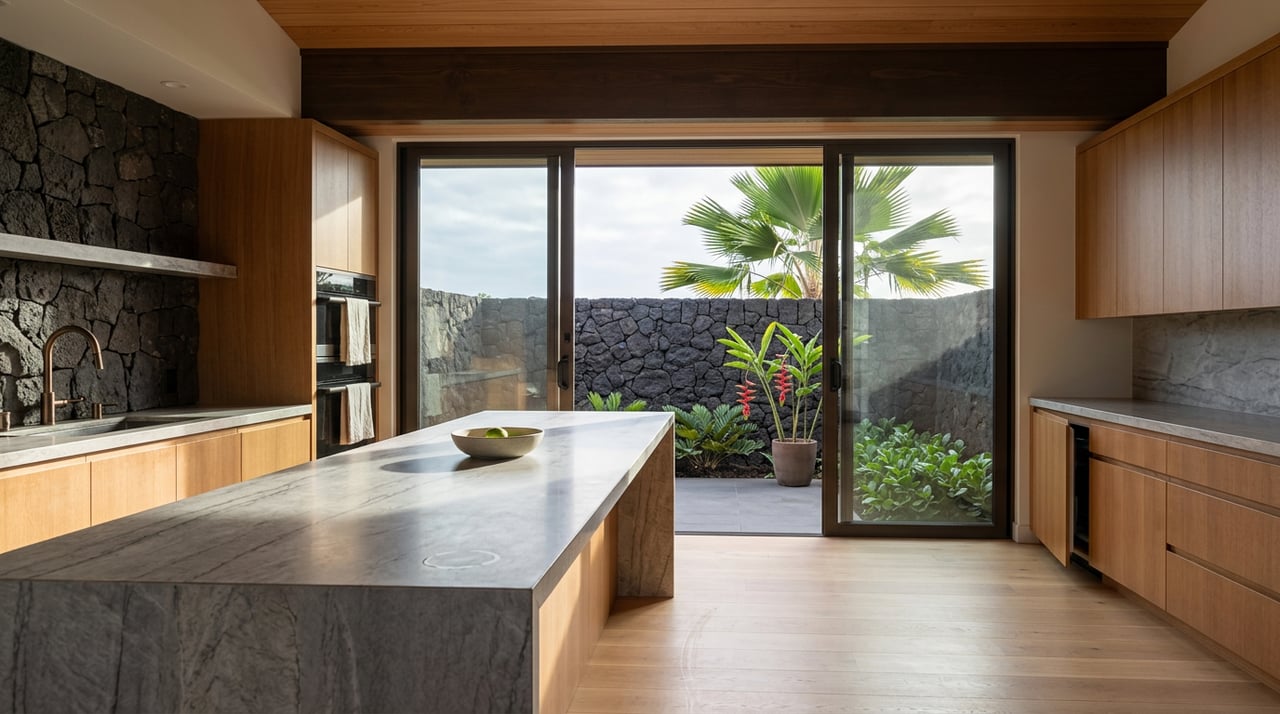
A title company request for "the HOA documents" on a Hōkūlia Phase 1 resale usually comes back with one packet: dues schedule, meeting minutes, a certificate of good standing from The Club at Hokulia. Everyone signs off. Then, sometimes days before closing, someone on the buyer's side asks about the shoreline park easement or the agricultural covenant referenced in the deed, and the answer isn't in that packet at all. It sits with a second association. Sometimes a third.
This isn't an oversight by a sloppy escrow team. It's a structural fact about how Hōkūlia is governed, and it traces back to a specific legal decision made during the community's 2013 bankruptcy reorganization, not to ordinary HOA bureaucracy. A buyer who assumes one resale certificate covers the whole community is working from the wrong model of how this particular property is set up.
The Split That Bankruptcy Left Behind
Hōkūlia's original developer, 1250 Oceanside Partners, was placed into Chapter 11 in March 2013 after a California investment firm acquired the bulk of its debt, which totaled at least $685 million at the time. It stands among the largest bankruptcy cases in Hawaii history by total debt. The reorganization plan cleared U.S. Bankruptcy Court in 2014. Sun Kona Finance LLC, the firm that had acquired the project's loans from Bank of Scotland, managed the debtor entities through the case, and Sun Kona Finance itself is controlled by Sun Kona Venture LLC, owned by SunChase Holdings' William A. Pope and Walmart chairman Rob Walton's Lake Avenue Investments.
What matters for a buyer today is what the plan deliberately kept out of that bankruptcy estate. The golf course, the subdivision's common areas, and the shoreline park were placed under three separate nonprofit associations, each with its own management and board, specifically so that lot owners' amenities and land stewardship wouldn't be tied up in a developer's insolvency. As Hawaii 24/7 reported when the plan was approved, those bodies were structured to be "controlled by various individual lot owners and have independent management and boards of directors."
That structure didn't dissolve when the bankruptcy closed. It's still how the community runs.
Who Actually Governs What
| Association | What it controls | Why it matters at closing |
|---|---|---|
| The Club at Hokulia | Golf course, clubhouse, dining, fitness and pool facilities | Membership is a separate application and acceptance process, not an automatic transfer with the deed |
| Hokulia Community Association | Subdivision roads, common areas, agricultural easement administration | Holds the covenants tied to the ag easement referenced in most Phase 1 deeds |
| Hokulia Park and Cultural Sites Association | The 140-acre shoreline historic park, trails, burial and archaeological sites | Manages a distinct set of stewardship obligations separate from the HOA proper |
Three boards means three sets of financials, three sets of meeting minutes, and, if any exist, three separate litigation or assessment disclosures. A buyer who only requests documents from one entity has only seen a third of the picture.
How the Rest of the History Explains the Rest of the Paperwork
The three-association split isn't the only piece of Hōkūlia's paperwork that has roots in old litigation rather than routine planning. In 2003, a circuit court ruling found the subdivision an illegal use of agricultural land, which shut construction down for roughly 30 months. The out-of-court settlement that let building resume in March 2006 cut the project's density from 1,400 lots to 665, added the agricultural easements that still appear on today's title reports, and required the developer to complete the Mamalahoa Bypass, a road obligation valued at $20 million to Hawaii County.
That bypass debt is worth a buyer's attention only because it's fully resolved, not because it's a live risk. Sun Kona paid the county's $20 million obligation in 2014, ahead of Oceanside's exit from bankruptcy, and the full length of the bypass opened to the public in November 2016. If a Phase 1 title report references the old bypass covenant, it's a historical artifact, not an open liability. Confirming that it's marked satisfied is still worth a line item on a buyer's closing checklist, if only because the covenant language itself hasn't disappeared from the chain of title.
Why Phase 2 Doesn't Make This a Phase 1-Only Problem
It's tempting to treat the three-association structure as a relic that only touches older Phase 1 lots, since Phase 1 was the section built before the bankruptcy. That reading doesn't hold up. Court filings from the case show that Front Nine LLC, one of the entities pulled into the same 2013 bankruptcy alongside Oceanside, held the undeveloped acreage that later became Hōkūlia's second phase. Phase 2 inventory, including newer clusters like Nalu Kai, emerged from the same reorganized estate and sits under the same governance framework: one Club, one Community Association, one Park and Cultural Sites Association, shared across both phases.
For a Phase 1 buyer, that means the three-association structure isn't a legacy quirk waiting to be simplified as the community matures. It's the permanent operating model for the whole property, old lots and new.
What to Actually Request Before You Sign
A buyer's agent or closing team working a Hōkūlia Phase 1 resale should request, separately, from each of the three associations:
- Current dues and assessment schedule, including any special assessments levied but not yet collected
- The most recent 12 months of board meeting minutes
- A statement of any pending or threatened litigation involving the association
- Confirmation of the seller's account standing, including any unpaid dues attached to the specific lot
- For the Community Association specifically, documentation of the agricultural easement's current compliance status on that lot
None of this replaces a real estate attorney's review of the actual governing documents. But knowing to ask three times instead of once is the difference between a closing that runs on schedule and one that stalls in its final week because a document nobody thought to request from the second or third association surfaces late.
Short FAQ
Does buying a Hōkūlia Phase 1 home include Club membership automatically? No. The Club at Hokulia requires a separate application and acceptance into its membership program. Owning a lot or home in the community doesn't by itself grant club access, so this step needs to be handled on its own timeline, apart from the property closing.
Is the old Mamalahoa Bypass obligation something a buyer should still worry about? Not as an open financial risk. The $20 million county obligation tied to the 2006 settlement was paid in full in 2014, and the bypass itself has been fully open to the public since November 2016. It's worth confirming the covenant is marked satisfied on title, but it isn't an unresolved liability.
Do all three associations charge separate dues? Each operates its own budget and board, so a buyer should request a current dues and assessment schedule from all three rather than assuming one number covers everything. The amounts and billing cycles aren't necessarily aligned across the associations.
A Phase 1 resale at Hōkūlia rewards a buyer who treats the community's paperwork the way its history actually built it: three separate books, not one. If you're comparing available Phase 1 homes and homesites and want a closing process that accounts for all three from the start, Hōkūlia's sales team can walk you through exactly which documents come from where. View Properties.