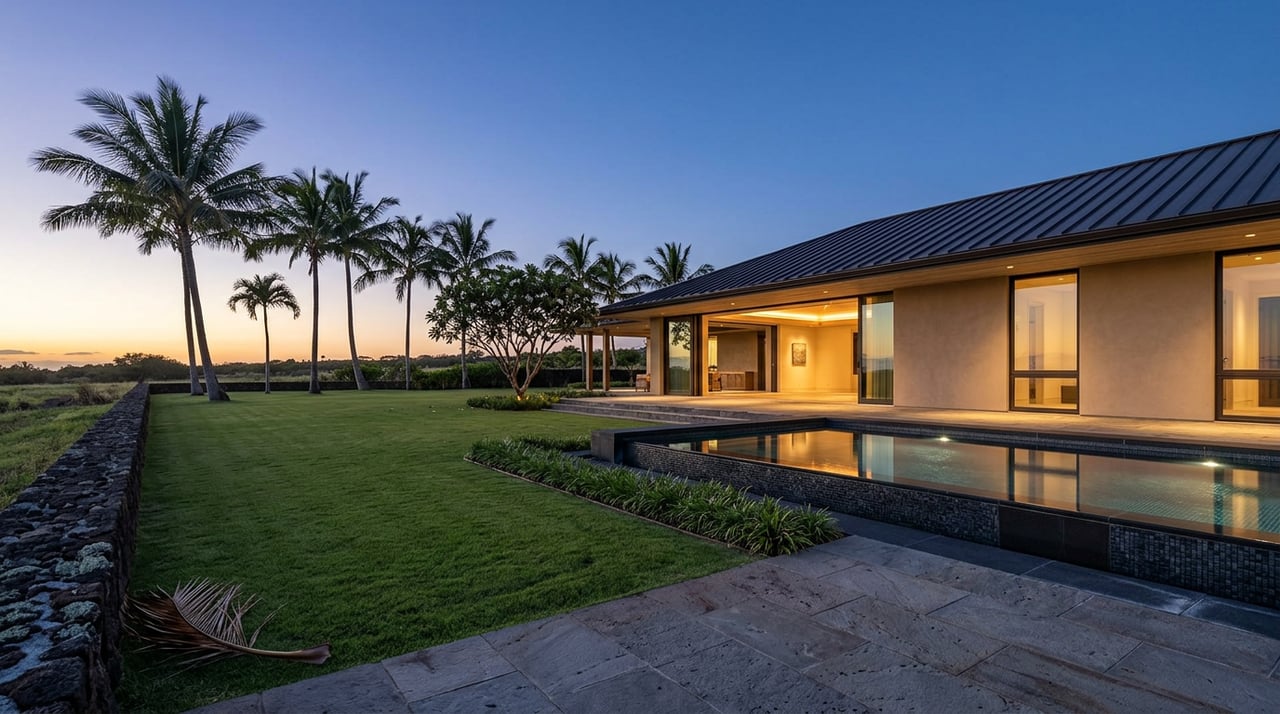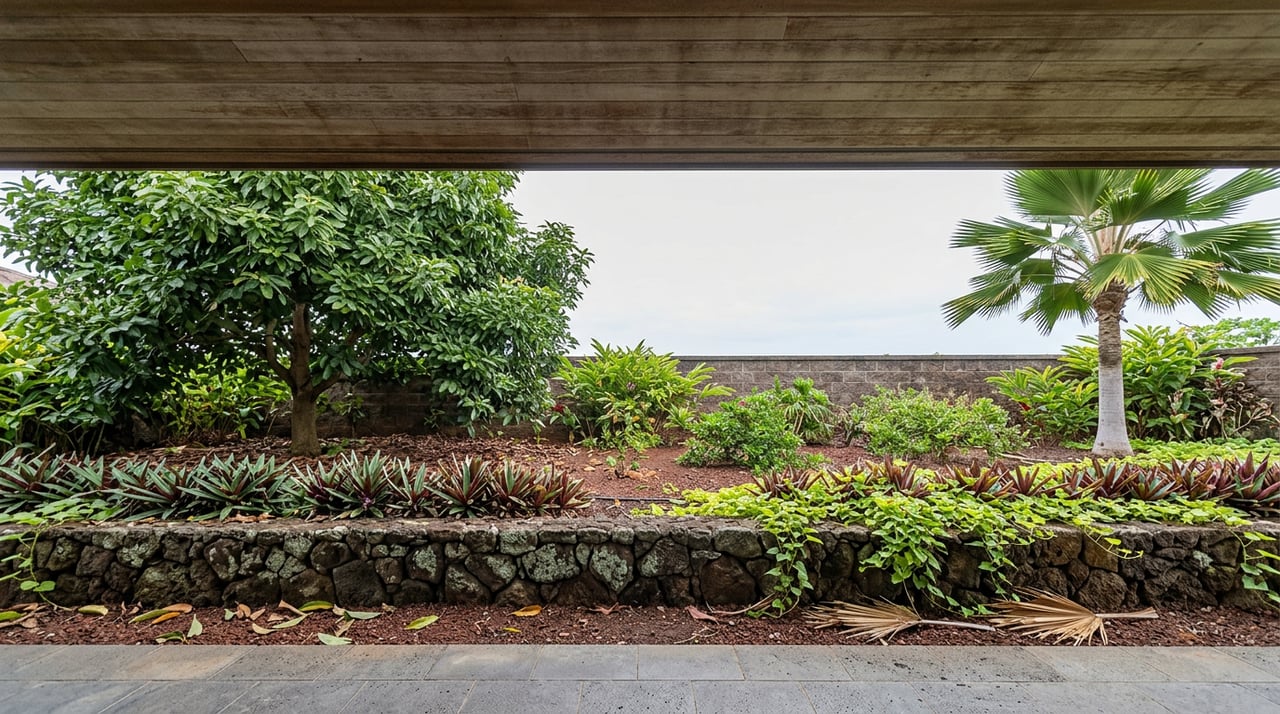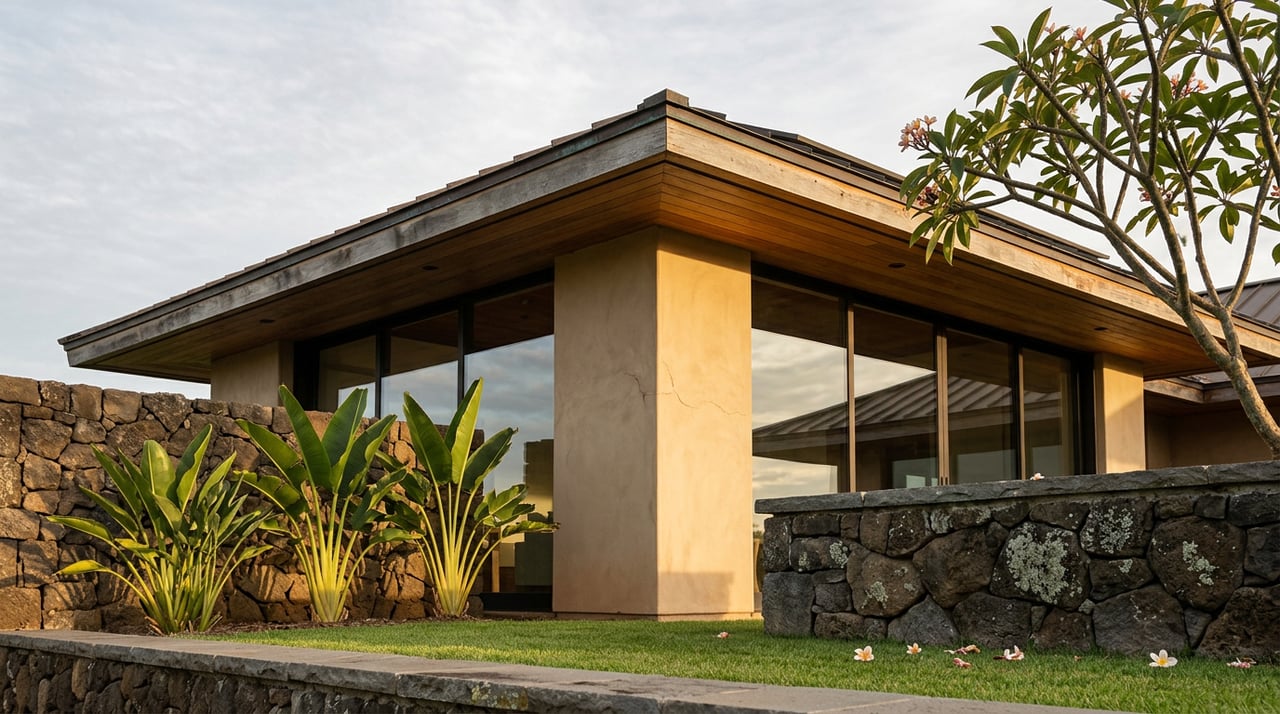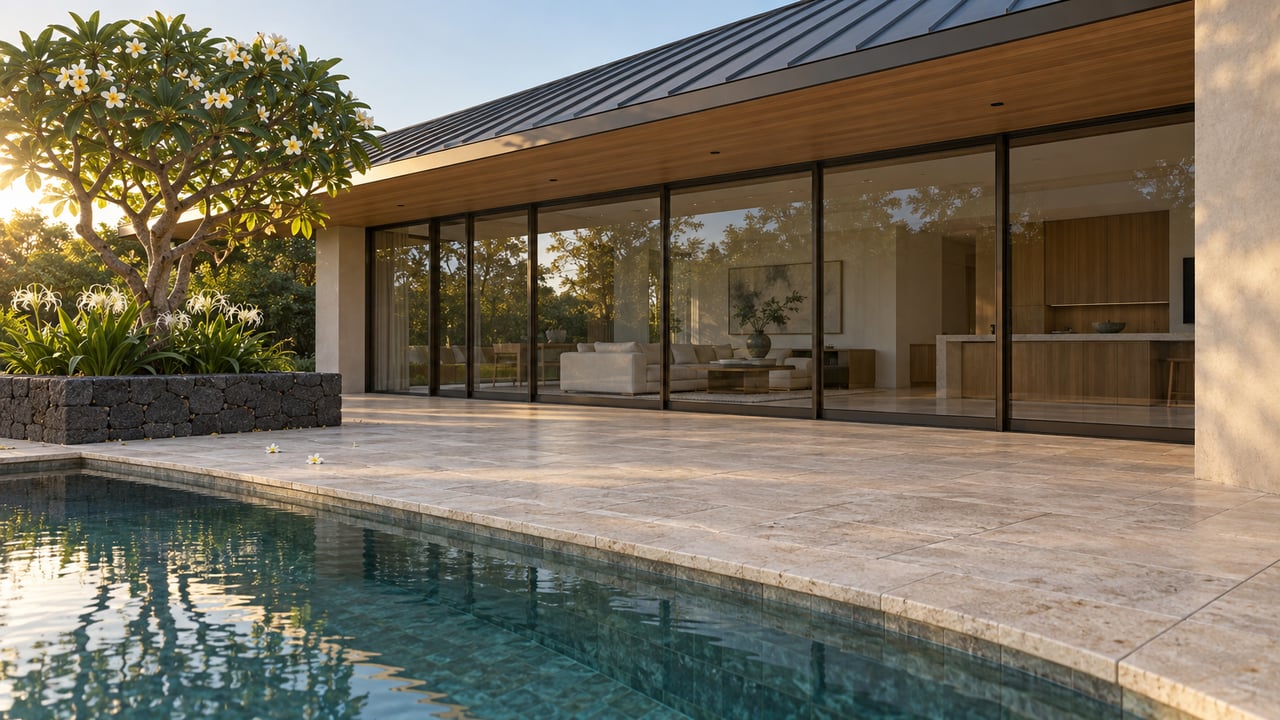
Lot 78 at Hōkūlia is still on the market. It sits front row along Nalu Kai's stretch of shoreline, 1.49 graded acres with utilities already stubbed to the property line, ready for a buyer to start drawings rather than permits. That description matches how it was marketed in 2025. It matches how it was marketed when Nalu Kai first opened to buyers in 2021. More than five years later, the parcel is still waiting, still described the same way, still priced within a few dollars of where the entire release started.
That single fact runs against the story scarcity is supposed to tell. Nalu Kai was launched as a hard-capped release of 20 oceanfront lots, the closest parcels to the water anywhere on Hawai'i Island, on a shoreline that cannot be extended or replicated. A fixed supply of an irreplaceable asset is the textbook setup for prices to climb as buyers compete for what's left. That isn't what happened here. The band has barely shifted, and the reason why says more about buying land in this price tier than the "only 20 ever" pitch does.
What the launch price actually was
Hōkūlia's developer, SunChase Holdings, released Nalu Kai to market in March 2021 through its development entity 1250 Oceanside, LLC. The announcement described 20 premier oceanside lots with direct ocean access along the community's three miles of coastline, priced from $4.25 million to $7.5 million. That range ran in coverage from PGA Magazine and LIV Golf Weekly through Ranch & Coast Magazine over the following year, always with the same ceiling.
By July 2025, Aloha State Daily's coverage of the community named two specific lots still available inside that same cluster. Lot 78, the 1.49-acre front row parcel, was listed at $7,515,000. Lot 65, a 1.21-acre second row parcel, was listed at $4.8 million. Line those figures up against the 2021 launch band and the movement is almost nothing. The top of the market moved up by $15,000 on a multimillion dollar asset. The lower figure landed comfortably inside the original floor.
| 2021 launch band | July 2025 reported price | |
|---|---|---|
| Full Nalu Kai release (20 lots) | $4.25M – $7.5M | — |
| Lot 78, 1.49 acres, front row | within band | $7,515,000 |
| Lot 65, 1.21 acres, second row | within band | $4,800,000 |
Four years of Hawai'i Island market cycles, a global run-up in vacation home demand, and a listing description that hasn't changed produced a price that hasn't changed either. For a buyer comparing coastal Big Island parcels, that flat band is a useful figure to hold alongside the "only 20 lots" headline.
Why scarcity here doesn't mean what it sounds like
A 20-lot release sounds like a market so tight that a serious buyer has to move fast or lose the chance entirely. The reporting on Hōkūlia's actual sales pace tells a different story. Aloha State Daily's July 2025 piece cited 15 total sales across the entire community in the prior year, a mix of 12 vacant lots, two completed homes, and one pre-construction purchase. That's the transaction count for the whole property, not just Nalu Kai. Spread across homesites priced from the low hundreds of thousands into the eight figures, 15 sales a year is a market where any single lot's asking price is closer to a starting point for negotiation than a settled market value.
A buyer pool this thin changes what scarcity actually does to price. In a liquid market, a fixed supply of desirable inventory gets absorbed and repriced quickly because there are enough active bidders to test the ceiling. In a market where the realistic buyer for a $7.5 million oceanfront homesite might be a handful of households worldwide in any given year, a lot can sit publicly listed for years without that silence meaning anything is wrong with it. It means the number of people who can write that check, want a private golf community on the Kona Coast, and are ready to act in a given window is small enough that timing rarely lines up. Scarcity of lots and scarcity of qualified buyers are two different constraints, and in this price tier the second one is doing more work than the first.
The gap between front row and second row
The other piece of the same 20-lot release undercuts the idea of a single "Nalu Kai price" even further. Lot 78 and Lot 65 are 13 lots apart in name, 0.28 acres apart in size, and $2.7 million apart in price. Both are graded, both have utilities stubbed to the frontage, and both belong to the same phase, same HOA, same 2021 release. The difference is row position: front row on the water versus second row behind it.
That gap is the clearest evidence that Nalu Kai isn't one market with a range. It's 20 individually priced parcels where shoreline proximity moves the number by millions, and where a published band tells a buyer almost nothing about what a specific lot will actually cost until that lot's exact position, elevation, and frontage get priced on their own terms. A $4.25 million to $7.5 million band is a real range, but it isn't a scale a buyer can average. It's two ends of a spectrum with very little that behaves like a typical middle.
What Mahea Lani looks like next to this
Hōkūlia's other core cluster, Mahea Lani, sits on the elevated hillside slopes rather than the shoreline and was the community's first phase developed. The same July 2025 Aloha State Daily reporting captured a much wider spread of activity there in the same window: a 1.15-acre finished residence with 4,800 square feet of living space and a pod-style layout listed at $9.6 million with club membership included, alongside two adjacent raw lots at $600,000 and $750,000, and a separate ocean-view corner lot at $1.6 million.
That's four distinct price points across finished homes and vacant land, reported in the same article, in the same month, as the two Nalu Kai lots that hadn't moved. Mahea Lani's spread reflects a cluster with more inventory turning over across a longer history. Nalu Kai's flat band reflects a cluster where the same handful of parcels keep reappearing in coverage because there simply hasn't been enough transaction volume to move the number. Neither pattern is better or worse. They're different liquidity profiles inside the same private community, and a buyer treating "Hōkūlia pricing" as one number is missing which cluster they're actually looking at.
The incentive still on the table
Aloha State Daily's July 2025 reporting also mentioned that a developer incentive was available with the purchase of Nalu Kai lots, roughly four years after the release first opened. The terms were not spelled out, so a buyer's first step is to ask what the incentive is today and how it applies to a specific lot. Alongside the community-wide sales count and the multi-year listing history of individual parcels, it is one more input into how much flexibility exists at this price tier.
What this means for a comparison shopper
None of this makes Nalu Kai a lesser holding. Three miles of west-facing shoreline that will never be extended is still exactly that scarce, and a front row parcel with direct ocean access is not a commodity that shows up elsewhere on the Kona Coast. What the four-year price history changes is the pressure a buyer should feel walking into a conversation about one of these lots. A published band from a 2021 release is not a current market signal on its own. The right questions are how long this specific parcel has actually been listed, what changed hands most recently in this cluster and at what price, and whether an incentive is currently attached to the ask. Those answers tell a buyer more about where the real number sits than the range on a page ever will.
If you're weighing a Nalu Kai homesite against another shoreline option on Hawai'i Island, ask for the sales history on the specific lot, not just the current price. Hōkūlia can walk you through what's actually moved in this cluster and what hasn't.